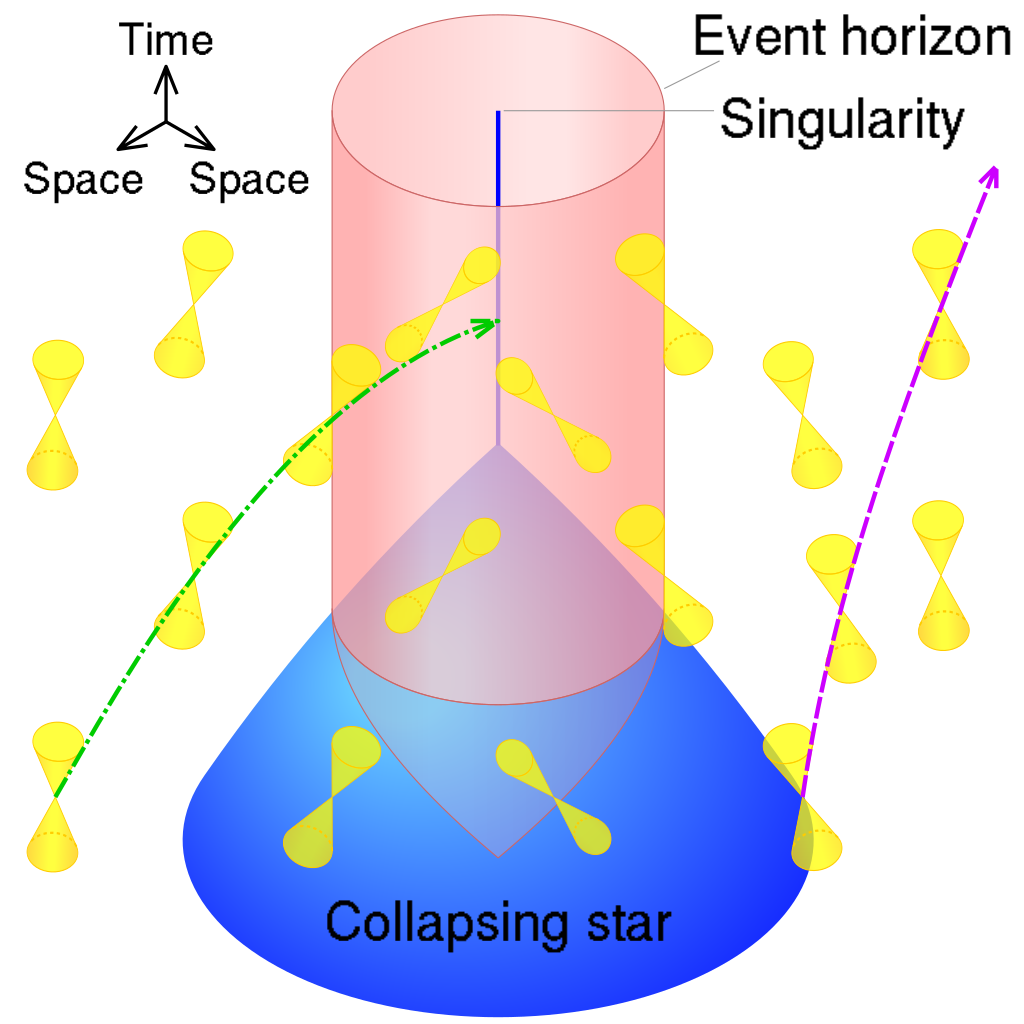
Black hole starships. And interstellar visions.
The research and advances in artificial intelligence are causing the need to re-estimate what things like consciousness means? When we are creating new and powerful AI. We are creating something that has not existed before. And quantum technology has increased the power of AI. So that means we might face surprising situations when we are driving AI algorithms by using quantum computers that are a minimum of 1000 times faster and more powerful than traditional binary computers.
Saturday, January 20, 2024
Black hole starships. And interstellar visions.
Nanotechnology brings innovative green energy for tomorrow's robots and microchips.
"Researchers have created leaf-shaped “power plants” that generate electricity from wind and rain, offering a new multi-source approach to clean energy production. Credit: SciTechDaily.com" (ScitechDaily, Scientists Develop Literal “Power Plants” That Harness Energy From Wind and Rain)
Maybe tomorrow's robots eat the organic waste. The idea is that the robot pulls organic waste into the tank. And then, the bacteria form the methane in that tank. Then the filter system removes carbon from methane.
There are also plans to use the methane-producing bacteria to make methane gas in synthetic stomachs. The bacteria that produce methane will be in the tank. And then, that gas can transport through carbon filters to fuel cells. The carbon filters can remove carbon from methane, which bacteria produce in the natural rotting process.
Genetic engineering makes it possible to create vegetables that produce methane and oxygen. That thing can improve methane production. A methane-oxygen mixture is suitable for rocket fuel, And that mixture can used in the fuel cells. In some models, there is another greenhouse that produces methane. And oxygen is produced in another greenhouse. That thing can produce methane and oxygen for rockets that operate as ferries between the Moon and Earth.
The biological power source could be excellent for that thing. The electric cells can also used in electrolytic processes. That can break water molecules into hydrogen and oxygen.
Things like bacteria that create electricity can be used as the power source for nano-size machines and microchips.
Researchers have developed new nanotechnical generators that can harvest energy from plants. The idea is that on the plant's leaves are small generators. Those nano-sized generators can look like miniature water mills. And when water flows on the leaves. It puts those generators flow.
In another model, those nano-sized generators are in the plant's water veins. And that thing can bring electricity to nano-size microchips. That is one way to make "power plants". Those ultra-small power plants can deliver energy for nano-size microchips and nanomachines that observe those plant's growth. But the network of those small microchips can also operate as one large computer. Maybe this kind of system opens the path to green computing and robotics.
The organic version of that kind of thing is like power lichen. In that artificial organism is the plant cell. And cell that produces energy. Things like electric eel cells are promising tools for those systems. In the most advanced models. The plant's cell can feed the living neuron. And the nanotechnical microchip. That is required to encode information that travels between neurons and non-organic parts of the system.
But in some other models, genetic engineering makes it possible to connect electric eel's electric cells. The electric-producing cell can get its nutrients from the plant's cell. That hybrid organism can used to make electricity for some computers and small robots. A large number of nano-size microchips can replace one large central calculation unit. The biological energy supply for those systems is one of the most interesting things in the world.
https://scitechdaily.com/scientists-develop-literal-power-plants-that-harness-energy-from-wind-and-rain/
Friday, January 19, 2024
The new quantum material is 1000X heavier with electrons than usual.
"Columbia University researchers have synthesized the first 2D heavy fermion material, CeSiI, a breakthrough in material science. This new material, easier to manipulate than traditional 3D heavy fermion compounds, opens up new possibilities in understanding quantum phenomena, including superconductivity. Credit: SciTechDaily.com" (ScitechDaily.com/Columbia Unveils Quantum Marvel: Material With Electrons 1000x Heavier)
What would you do with material that mass you can adjust? The new 2D material called CeSil (cerium, silicon, and iodine) is the material whose electrons turn 1000X heavier than usual. That means electron flow or electricity can adjust the weight of that material.
That kind of material can make many things. It can used to make new types of anti-thief systems. When expensive merchandise is waiting for transportation the system can increase its weight. Another thing that this kind of material can make are the new types of space suits. The space suit's weight can adjust so that it's comfortable and safe on the moon and Earth.
This type of material, like CeSil, also makes it possible. Astronauts can operate in artificial gravity created using rotating space stations. The problem with those "Von Braun wheels" is that the Earth's gravity requires an extremely fast rotating speed. And that causes stress for those structures. In the rotating wheel, the centripetal force is making the artificial gravity. The heavyweight suits can make astronauts feel comfortable also in weak gravity.
The material that weighs the system can adjust making it possible that the astronauts can use suits that anchor them on the floor in weak gravity. That thing makes also weak gravity comfortable. And those astronauts can use this kind of technology to adjust their suit's weight in the different gravitational areas.
On the moon, weak gravity makes working in lightweight suits dangerous. And on Earth, the lightweight suits are more comfortable than on the Moon. So maybe in the future, the system can adjust the weight of the suit by using electron flow. In the same way, the quantum system can adjust things like aircraft and ship's weight.
The aircraft's body is formed of thin layers of titanium and aluminum. It's possible. That there are 2D material layers between those metal layers that are on top of each other like butter dough. Those 2D materials can adjust the weight of the aircraft's body and change its barycenter. The 2D materials like graphene can cover entire aircraft.
And the material that adjusts its weight can be between metal layers. In the same way, that kind of ability can make it possible to create ships that have new abilities to adjust their balance and barycenter.
And that gives them interesting abilities. The thing is that even if the material is 2D that can make it possible to create extremely large and elastic structures. In those structures, the 2D materials can be put on top of each other. There could be nano springs or fullerene sticks between those layers.
And that "hamburger structure" can make it possible to create new types of structures. The 2D structures can also form the plate layer that is well-known from samurai armor. The small plates that are connected with elastic materials like kevlar can make a new way to create space suits and body armor.
https://scitechdaily.com/columbia-unveils-quantum-marvel-material-with-electrons-1000x-heavier/
Generative AI can decode human memories and imagination.
The breakthrough in generative AI use in mind-reading is now at least at the door. The generative AI can read memories and imagination. And that thing brings new research opportunities. Maybe quite soon. Researchers can see other people's memories and dreams from their screens. Complete knowledge of the systems is a requirement for control and benefit, and BCI (Brain-Computer Interface) is no exception.
The ability to see what people dream gives new types of opportunities for the R&D process. The idea is that the BCI injects some model into the brain, and then the person will handle it while sleeping. This kind of new ability to decode human memories and imagination can make it possible to solve why we see dreams. And it can also open new lines for criminal investigation.
**************************************************************************
"UCL researchers used generative AI to model brain functions, uncovering how memories are formed, replayed, and used for imagination. The study emphasizes the reconstructive and predictive nature of memory, offering new perspectives on human cognition. Credit: SciTechDaily.com" (ScitechDaily,Decoding Human Memory and Imagination With Generative AI)
"Recent research discovers that our ability to distinguish similar memories improves over time due to the dynamic nature of engrams, brain cells involved in memory storage. This finding provides key insights into the treatment of memory disorders. Credit: SciTechDaily.com" (ScitechDaily, Unraveling Memory’s Molecular Mystery: How Brain Cells Stabilize Information Over Time)"MIT researchers have identified unique electrical activity patterns in the brain’s cortical layers, consistent across different species. This discovery, showing faster oscillations in superficial layers and slower ones in deeper layers, provides insights into brain functioning and disorders. Credit: SciTechDaily.com" (ScitechDaily, Rhythms of the Mind: MIT Neuroscientists Reveal Universal Brain Wave Patterns)"A recent study reveals that strong neural connections in the brain, crucial to its functionality, are likely formed by universal self-organizing principles, not species-specific mechanisms. This finding, based on advanced imaging and a Hebbian plasticity model, could reshape our understanding of brain structure in various species. Credit: SciTechDaily.com" (ScitechDaily.com, Brain Connectivity Breakthrough: Similar Neural Network Patterns Discovered Across Diverse Species)
**************************************************************************
The process that brought this ability to read people's minds consists of AI solving the memory's molecular vortex. And that thing opened the road for the generative AI to decode the brain's imagination and memories. And that ability brings new types of things, that people can use in many operations. Solving the molecular mystery of how memory stores and selects information that brains store brings new abilities for researchers.
If we think, that the brain's internal language is universal. That means we can read the minds of other species. In that model, we could decode the brain signals of another species by using the same methods as human mind-reading. The universal brainwave patterns tell that all people have a brain, that speaks the same language. But is it possible that also other species have the same kind of universal language, and could that universal language be the same with humans and other species?
There is the possibility that all species have the same brain internal language. In all species, the brain has similar neural patterns. And if that thing means that the brain's internal language is always the same. That thing brings awesome possibilities for researchers. The BCI systems can help people communicate with each other silently using brain waves.
Or at least people can simply move their lips and speak whisperly. Then the brainwave reader reads the EEG from the Wernicke-lobe. Then the receiver can transfer that data to the receiver's Broca lobe. The same system can used to control the BCI systems. The system decodes that EEG for a modified "speech to text" application. And then that application sends those texts for generative AI. Similar systems can also used to give orders for animals.
https://scitechdaily.com/decoding-human-memory-and-imagination-with-generative-ai/
https://scitechdaily.com/unraveling-memorys-molecular-mystery-how-brain-cells-stabilize-information-over-time/
https://scitechdaily.com/brain-connectivity-breakthrough-similar-neural-network-patterns-discovered-across-diverse-species/
Graphene could be ideal for quantum bits.
"In the BLG double quantum dot used in this work, electrons (the blue spheres) have both an intrinsic angular momentum (spin, given by the arrows through the spheres) and a pseudo-spin (valley, given by the rings rotating in opposite directions). Credit: ETH Zurich/Chuyao Tong" (ScitechDaily, Redefining Quantum Bits: The Graphene Valley Breakthrough)
Graphene can form new types of quantum bits. There are two ways to use graphene as qubits. In the first model, the carbon atoms trap qubits into the electric field in the graphene structure. In some other models, the system puts electromagnetic fields around carbon atoms into superposition and entanglement.
Graphene is a carbon atoms 2D network, and if the carbon atoms or their quantum fields can turn into the superposition that makes the new visions for the room-temperature quantum computers. Superposition means that particles oscillate with the same frequency.
In regular quantum computers, qubits are stabilized at a very low temperature. But it's possible to make this stabilization by using high-pressure materials. Some materials can turn superconducting near zero Celsius and at reasonable pressure. The problem with those materials is that they are expensive.
The graphene on microchips can turn into superconducting or stable conditions using two ways.
1) The system can press that graphene by using lasers.
2) Or by using acoustic systems. In the last ones, graphene is between carbonite crystal layers. The pressure system presses those layers together.
"Scientists have innovated a compact semiconductor chip integrating electronics with photonics, drastically enhancing RF bandwidth and control. This breakthrough, pivotal for advanced telecommunications and radar systems, marks a significant step in semiconductor technology, boosting Australia’s potential in semiconductor research and manufacturing (Artist’s concept). Credit: SciTechDaily.com" (ScitechDaily, Revolutionary “LEGO-Like” Photonic Chip Paves Way for Semiconductor Breakthroughs)
This type of microchip can act as a tool. That transforms traditional bits into qubits. The system can involve a graphene layer. That the lasers or acoustic pressure systems transform into qubits.
The problem is that the material turns superconducting in a very high pressure. The 2D graphene can turn into superconducting by pressing its lasers. The 2D structure will not break in the high pressure that comes from both sides of that structure. And that system makes it possible to create microchips.
There is a graphene layer on them. Then the computer system just presses that graphene layer with pressure. That is created by using lasers or acoustic systems. In acoustic systems, the monotonic sound presses the gas flow that travels over carbonite chrystal. Then that chrystal presses the graphene.
The superconducting condition makes it possible that the system can control the qubits, and information that flows in it. The problem with qubits is that they are sensitive to oscillation. Oscillation is the thing that causes problems with quantum entanglement.
In quantum computers, information is stored in qubits. The qubit is a particle and information is on it as layers. Then the system transports information between point A to the point by putting two particles into the superposition and entanglement. Then the entanglement. That is the power field that connects those two superpositioned particles starts to transport information.
The entanglement is like a strap between particles. And those particles are like gear wheels. So the superpositioned and entangled particles are like gear. The superposition means that the particles oscillate with the same frequency.
The reason, why those particles must be in superposition is that the entanglement or strap that transports information jumps off those particles if they oscillate with different frequencies. So that's why those particles are frozen near zero Kelvin degrees.
But there is another way to make stable conditions. It's possible. That lasers can push the particles from different directions. And that thing stabilizes qubit. Graphene is the most promising thing for that purpose because it's a 2D material.
https://scitechdaily.com/revolutionary-lego-like-photonic-chip-paves-way-for-semiconductor-breakthroughs/
https://scitechdaily.com/redefining-quantum-bits-the-graphene-valley-breakthrough/
Tuesday, January 16, 2024
Machine learning boosts the drug design.
"Cambridge researchers, in collaboration with Pfizer, have created an AI-driven ‘reactome’ platform to predict chemical reactions, expediting drug design. This innovative approach utilizes machine learning and automated experiments, significantly improving the accuracy and speed of pharmaceutical development. Credit: SciTechDaily.com" (ScitechDaily, AI-Powered Drug Design: A Leap in Pharmaceutical Innovation)
Researchers created an AI-based system that they can use for drug design. That system can control complicated structures and how to make those structures work right. When a drug designer starts work that person selects the point where that drug wants to effect. The drug can affect cell's genomes, it can affect ion pumps or lipids that form the cell's shell.
The problem with drug design is that the complicated molecules require a fully controlled environment. This is the new thing in AI and how to benefit that thing. The AI is the language model that controls multiple subsystems. Those subsystems control the reaction chambers and many other things. Quantum computers and other new, and powerful calculation methods can use to simulate those new complicated molecule's behavior in cells.
The nanomachines are similar to the drug molecules. There is a vision about nanomachines that can act as medicines. Some of them are like viruses. They are heading to the wanted cell group. And then those nanomachines pump protein fibers and enzymes to the targeted cell. Those things can destroy its cell organelles or DNA or simply fill the cell with protein fibers. Or the synthetic retrovirus transports artificial DNA into the targeted cells, and that DNA can cause the cell to die. That kind of thing can be the future of medicine.
The problem is that there is a silent pandemic in the world. Silent pandemia is an antibiotic-resistant bacteria. Antibiotic-resistant bacteria is a bigger problem than any COVID-19 can ever be.
Researchers testing nanomachines and nanopolymers against those bacteria. The nanopolymers are like springs that open inside the cell and destroy its shell. Another way that nanopolymers can act is that they will connect themselves to the cell's outer shell. Then those long polymer fiibers just pull electricity out from the cell's bark. That finishes the ion pump's action.
The nanomachines can destroy the cell organelles when they slip into the cell. The difference between nanomachines and nanopolymers to traditional medicines is that their action is mechanical. Complicated systems require complicated and highly advanced control systems. The design and development of complicated molecules are very accurate work. And the most dangerous case is that nanomachines can get out of control. That thing can turn entire humans into liquid when nanomachines break the cell barks.
https://scitechdaily.com/ai-powered-drug-design-a-leap-in-pharmaceutical-innovation/
The AI's future is morphing neural networks.
"A study from Bar-Ilan University reveals that the brain’s efficient shallow learning, involving a wide network with few layers, can compete with the multi-layered deep learning models in complex classification tasks. This challenges the current design of GPUs, which favor deep over wide architectures." (ScitechDaily, How Can the Human Brain Compete With Artificial Intelligence?)
How can human brains compete with AI? That is a good question. Using and developing the AI requires the ability to make questions in the form, that the AI can complete the task. The AI can handle limited data sources with extremely high speed and high accuracy but still, the AI requires human operators. The thing is that. The AI is developing all the time. And today AI participates in that process. So the AI is one "member" of the R&D teams that create new solutions for the AI.
Computer programs that AI requires are extremely complicated. One solution for making AI is that the AI is formed of modules. Thousands or even tens of thousands or millions of databases are connected into one entirety. The network there databases that contain long-term information cooperate with the short-term databases.
The last ones are in the RAM (Read Access Memory) and the long-term data stored in the hard disks. The system drives information from sensors into the short-term memory. And then AI brings data from long-term memory structure that it can respond to challenge.
Then it compiles that information with databases, and if there is a match. The system starts to operate as the database tells how it must react. The system has certain parameters. That is used to select information for long-term memories. Mixing those databases makes those systems self-learning. Self-learning systems require information that they can mix. Because without information. Is no self-learning.
The "Iron brain": kernel-based morphing neural networks.
The iron brain means hardware-based AI. In that model. The AI and its complicated databases are programmed in the kernel. The kernel means the programs that control hardware and operating system's cooperation. The kernel is like every other computer program, but its place is in the microchips.
One of the most interesting microchip versions that are suitable for running complicated code is the GPU:s (Graphics processing unit). Those GPU processors can drive hard and complicated code. That means every GPU has a small number of databases.
And then there is the AI software. Those GPUs can create neural networks that can operate like the human brain. In that case, those GPUs are operating like neurons, and they can make multiple connections between each other acting like brains. These kinds of non-organic systems are the next-generation morphing neural networks.
https://scitechdaily.com/how-can-the-human-brain-compete-with-artificial-intelligence/
https://learningmachines9.wordpress.com/2024/01/16/the-ais-future-is-morphing-neural-networks/
Time travel and its connection with philosophy.
“The 2022 physics Nobel Prize was awarded for experimental work demonstrating fundamental breaks in our understanding of the quantum world, ...
-
Kaikki uskonnot ovat olevinaan jotenkin humaaneja, koska niiden johtajat saavat näin kannattajia, eli "seuraajia" kuten he san...
-
Kuvituskuvaa Kuva I 1. Kuvat aikamatkaajista eivät ehkä ole väärennettyjä Internetissä on paljon tarinoita sekä videokuvaa esimerki...
-
“Timing delays in quasar light bent by massive galaxies offer a fresh way to measure the universe’s expansion, and the results deepen the ri...