Tuesday, October 10, 2023

Is our reality a computer simulation? The new law in physics can tell that is true.

    Is our reality a computer simulation? The new law in physics can tell that is true. 


We might think that people who claim that our reality is a simulation are crazy. But the fact is that it's 50% possible that our life and reality are simulations in a computer's memory. There is also a steampunk vision about that theory. The base in that steampunk version is in large city warfare areas, where the Warsaw Pact military trained in city warfare. If some person lives in that kind of military exercise area for their entire life, that person believes that there is infinite war on Earth. 

When we think about the simulated reality theory, we face another thing. And that is who made that simulation? What is the motive for that kind of thing? In some visions, the crew in interstellar spacecraft are in hypothermic hibernation, and they live in the simulation. The purpose of the simulation would be that those people can spend time in that alternative or augmented reality. The system uses augmented and virtual realities to develop new tactics and strategies for colonizing new worlds. 
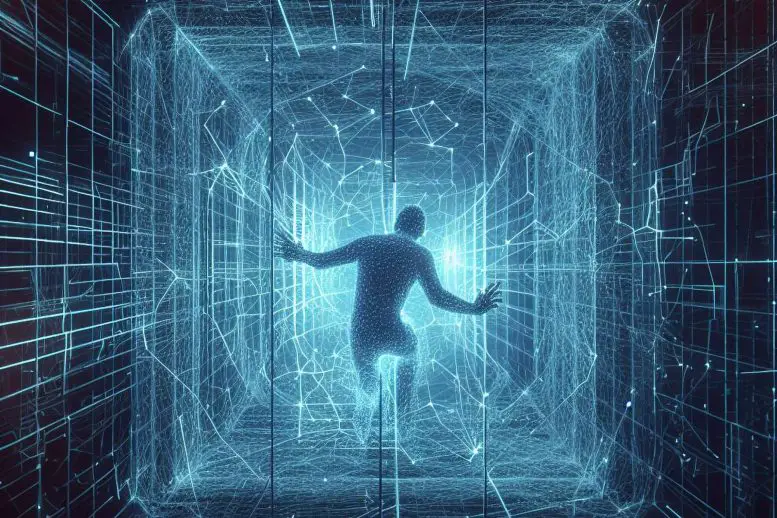


"Dr. Melvin Vopson, a physicist from the University of Portsmouth, has proposed a new law of physics that might support the theory that our universe is a simulated reality. Drawing from the field of information physics, he suggests that physical reality is composed of bits of information. His latest research suggests that this new law, based on principles of thermodynamics and information dynamics, has implications across biology, atomic physics, and cosmology". (ScitechDaily.com/Is Our Reality a Computer Simulation? A New Law of Physics Could Prove Elon Musk Is Right)


The SciFi book "Foundation" and "Psychohistory" gave ideas for this simulated reality theory. 


Another background of this simulated reality theory is in  Isaac Asimov's SciFi novel series "The Foundation". The psychohistory, a fictional or hypothetical mathematical method to predict human behavior, could be functional because its creators simply changed the files. 

In Asimov's book, the psychohistory base is in the NTP formulas that Ludwig Boltzmann. , who was a real mathematician, introduced in the 20th century. The psychohistory base is in datasets. That includes every single case that people face in a certain timeline. Then the people's reactions to those things are also stored. And after that, the case and reaction combined with things. That happened at this moment. 


Fake news can be one version of the simulated reality. 


The simulated reality can used to make the dataset that the AI needs to record the reactions. Also, the person named Orson Welles put his name in history in this theory. Fake news is one version of the simulated reality theory. Orson Welles created the radio play called "War of the Worlds". That is based on H.G Wells's novel. And in that day many Americans believed that the Martians attacked. 

That information tsunami of false news began when some listeners believed. That Martian's offensive began. They told that thing to other people, and that caused that rumor. Or false information started to escalate.  Nobody knows how many people believed that the Martians attacked. But that case is one version of the disinformation.

Wikipedia tells about this case like this:  "In 1938, his radio anthology series The Mercury Theatre on the Air gave Welles the platform to find international fame as the director and narrator of a radio adaptation of H. G. Wells's novel The War of the Worlds, which caused some listeners to believe that a Martian invasion was occurring. Although reports of panic were mostly false and overstated, they rocketed 23-year-old Welles to notoriety." (Wikipedia/Orson Welles)


That mistake gave an idea that these kinds of things could used to create the behavioral matrix of the people's behavior in that kind of situation. In some visions, the intelligence sends fake radio messages to KGB agents that Russia is attacking or planning an attack. Then that known agent's behavior is used to make the matrix, which makes it possible to predict the nuclear or any other strike. 

The fact is that. The thing behind this psychohistory is the idea that if the person reacts somehow to something, that person reacts the same way to all similar things. 

And that allows the AI to create datasets from different situations. When a person goes into a similar situation. The AI could predict the reaction. If the AI can make a large enough dataset from a group that is large enough. 

That thing allows it to predict reactions in a larger group of people. The quantum computer-based AI architecture makes it possible. That the AI can follow millions of people at the same moment. In that model, every behavior type has its index number. Then the computer simply calculates an average from those numbers. And that allows us to predict how certain groups of people behave. 

So they created an alternative artificial reality, that forces people to react somehow to the threat. And that alternative, artificial reality is the thing that makes people make something that they would not do otherwise. The creators of the psychohistory simply made artificial cases straight from their imagination. And then they suggest some solution, and of course, that solution is right, because the machine is programmed to lose. 


https://scitechdaily.com/is-our-reality-a-computer-simulation-a-new-law-of-physics-could-prove-elon-musk-is-right/


https://en.wikipedia.org/wiki/Foundation_(Asimov_novel)


https://en.wikipedia.org/wiki/Ludwig_Boltzmann


https://en.wikipedia.org/wiki/Orson_Welles


https://en.wikipedia.org/wiki/Psychohistory


https://en.wikipedia.org/wiki/Psychohistory_(fictional)


https://en.wikipedia.org/wiki/The_War_of_the_Worlds


Monday, October 9, 2023

Soundwaves can control light.

Soundwaves can control light.


Soundwaves can control light. And that makes them new tools for making photonic computers. Soundwave is the denser point in the air. All changes in gas and other materials' density form a border layer. And that kind of border layers are changing the light's direction. 

Same way, the atmosphere around planets changes the direction of photons. If researchers make a chamber where there is gas and then aim the extremely sharp loudspeakers at that gas those soundwaves can aim laser rays in the desired direction. And that thing makes it possible to create a router. That aims laser rays into the wanted route. 


"A laser light beam passes between a loudspeaker-reflector array that creates a grating of air. The laser beam interacts with this grating and is deflected without contact. Credit: Science Communication Lab for DESY" (ScitechDaily.com/Sound Controls Light: Deflecting Laser Beams Using Air)


But laser light interacts oppositely way. When laser light hits medium it pumps energy to it. That energy makes atoms oscillate, and then that oscillation will travel all over the system. So when laser ray hits liquid like water it expands it. That expansion is the soundwave that can be used as sonar or even as a weapon. 

The laser can make a loudspeaker that uses liquids. When a laser ray hits liquid between membranes it expands that material. And that expansion is heard as soundwaves. 

When a laser satellite sends a laser ray to water or any other medium that thing sends sound waves. And other laser points around that center laser can observe that soundwave and its reflections. That thing makes it possible to search underwater and underground objects.  If the laser ray is strong enough it forms a similar situation with depth charge. 


"An intense laser pulse (in red) hits a flow of water molecules, inducing an ultrafast dynamics of the electrons in the liquid. Credit: Joerg M. Harms / MPSD" (ScitechDaily.com/Intense Lasers Illuminate the Hidden World of Electron Dynamics in Liquids)


Laser engine. 


The laser engine uses a liquid that is in the chamber. When a laser ray hits that liquid it expands it. And that expansion can push the piston down. In this case, the system can cool the liquid in the piston chamber if it is cooler with enough power. 

Or it can drive liquid or vapor from one chamber to another and rotate the turbine wheel in the channel between those chambers. Then that liquid can be cooled. And recycle in the system. 

The liquid can be liquid helium or nitrogen and the laser ray can interact with that liquid indirectly. In the non-direct version laser rays (or microwaves and electric arcs) are aimed into the expansion chamber. That warms the chamber's wall. 

That makes it possible to create the cold steam engine. This kind of system can operate without electricity if it has liquid nitrogen or helium. When that gas is in an expansion chamber there is no heat insulation. When it's at room temperature, the gas starts to expand. 

Lasers can increase the temperatures of some other objects like metal powder. Then that metal powder will drop into the chamber there is that ultra-cold liquid. 

That causes the expansion that can be used in turbine or piston engines. After that, the system can pull those metal bites with magnets to re-use. 


https://scitechdaily.com/intense-lasers-illuminate-the-hidden-world-of-electron-dynamics-in-liquids/


https://scitechdaily.com/sound-controls-light-deflecting-laser-beams-using-air/

Unlike researchers previously thought, new research links brainwaves straight with memory.

 Unlike researchers previously thought, new research links brainwaves straight with memory. 


The new observation that memory is directly connected with brainwaves opens new visions for medical treatment that is used to fix brain damage. When we are losing some neurons, the thing that we lose is the memory stored in those cells. All our skills and abilities are stored in memory. And the observation that the brainwaves interact with memory opens a new path to neural research. 

It's quite easy to transfer the brainwaves between people. The only thing that we must do is store the EEG in some file or C-cassette. Then that file can driven to the cerebral cortex using the electric shock system, which transmits that signal into brain cells. It's possible to store a person's brainwaves in computer hard disks. And then transmit them over generations. 

EEG signals travel in the synapses. They are like small electric wires in the human brain. The radio transmitter that can affect magnesite can make it possible to send radio signals straight into the human brain. That system can used to download data straight into the nervous system. 


"Neurons produce rhythmic patterns of electrical activity or oscillations in the brain, driven primarily by memory, according to a recent study. Contrary to previous beliefs, the research showed that these theta oscillations in the hippocampus were more prevalent when individuals were remembering events than experiencing them, highlighting memory as a key driver in theta activity and offering potential pathways for treating brain damage and cognitive impairments." (ScitechDaily.com/Contrary to Previous Belief – New Study Links Brain Waves Directly to Memory)


When we are talking about things like skills, we talk about memories. When we learn something, we make memories, which involve data about movements and other kinds of things. If we want to create the BCI (Brain Computer Interface), we must allow computers to communicate with brain cells without limits. 

The need to program neurons doesn't necessarily mean the ability to program human brains. The other thing that we might want to program is the "mini-brains". The mini-brains are neuron groups that are created from cloned neurons. Those neuron groups can used to communicate with microchips. 


And that makes it possible to create microchips. They have many more abilities than normal, non-organic microchips. The hybrid microchips that use insect neurons and nano-size silicon microchips can act as brains for nanomachines. 

When we think about things like OBE (Out-Of-Body Experiences), some electromagnetic waves like radio waves may travel through the animal's or human brain. And if those radio impulses resonate with the axons that carry EEG- or brain waves that can make it possible to transmit thoughts. 

The connection between brainwaves or neural electric functions with memory opens new visions for creating things like brain-computer interfaces, restoring brain damage, and teaching new skills to people. Researchers can use that information to program cloned neurons. That researchers created in laboratories. The synthetic brain waves can driven to those cells that can control the bionic microchips. 

The bionic microchips are hybrid. That is connected with non-organic microchips. That non-organic microchip acts as an interface between robots and living neurons. That kind of system can transmit information in cloned neurons that are used to replace brain damage. 


https://scitechdaily.com/contrary-to-previous-belief-new-study-links-brain-waves-directly-to-memory/

Sunday, October 8, 2023

The future of medicine is in artificial organisms.

  The future of medicine is in artificial organisms. 


In the future medicines will be produced by using artificial organisms. Artificial organisms are impressive tools. Genome reprogramming makes it possible to create next-generation medicines in the human body. The reprogrammed bacteria and immune cells can make any biological chemicals in the world. Artificial organisms can reprogram other cells by injecting RNA molecules into them. 

Genetically engineered bacteria can produce blood cells for humans. In the worst cases where blood leak is very aquatic those bacteria can inject in the human body to produce blood cells. The ability to create artificial RNA makes it possible to reprogram cells. The artificial organism could destroy the old DNA from cells and replace it with the new DNA that might turn the cell into another. 


There are two possibilities for how those things can make that thing. 

1) The cell itself turns to another one. 

2) The descendants of that cell turn into another. 

"Researchers are exploring hybrid peptide-DNA nanostructures to develop artificial life forms with potential applications in creating viral vaccines and disease-treating nanomachines. These innovations could herald groundbreaking changes in healthcare". (ScitechDaily.com/The Future of Medicine: Artificial Life Forms)


The most effective medicine in the world is the RNA sequence that programs targeted cells to die. The RNA sequence can also involve a sequence that makes the cell destroy its membrane by turning its slime very acidic. That thing removes the possibility that the cell death will escalate all over the body. 

Things like microchip-controlled cyborg bacteria can destroy cancer cells by injecting them with RNA sequence that activates the programmed cell death in those cells. Finding those sequences from the cells is very easy. They are the last DNA sequences in cells. 

And then the bacteria or any other cells can program to produce those DNA sequences. When bacteria change genomes with other bacteria it just injects those DNA sequences in them, and that thing causes death in them. 

The cyborg bacteria can do many other things than just destroy unwanted cells and turn cells into another. The microchips that control those organisms can be used to give electric stimulation to neurons. That means they can transmit data to the neural system. And they also can read electric impulses from the neurons and transmit them to receivers. The cyborg bacteria can carry microchips to wanted cells. Or they can travel to the wanted place by using the remote controller. 

The militarization of genome technology is a dangerous thing. 

The artificial cells can produce RNA and DNA sequences that program other cells to die. Genetically engineered cells can produce things like tetrodotoxin in the victim's body. And that thing makes a person a zombie that cannot resist any order. 

The militarization of this technology is very addictive. Artificial organisms are tools that can produce deadly viruses. Genetically engineered bacteria can produce viruses that can be used as biological weapons. Those bacteria can deliver to enemy areas and then they produce those organisms. Reprogrammed cells can produce chemicals that make a victim's immune system attack against wanted tissue. 

But genetic weapons are more deadly than we even imagine. Genome itself is a weapon. The artificial RNA and DNA can program cells to die immediately. And that causes gangrene in the victim's body. And as I wrote before finding those DNA sequences is not very hard. That makes it possible to create the so-called "death virus". The virus simply programs cells to die. 


https://scitechdaily.com/the-future-of-medicine-artificial-life-forms/

Does the brain in a dish have moral rights?

  Does the brain in a dish have moral rights? 


Can we someday make the brain in a jar in real life? Genetic engineering and cloning. Along with cell re-programming gives us the ability to create artificial brains. And in the wildest visions, the artificial brains can live in a dish in the laboratory and interact with computers using the EEG and Brain-computer interface. Those artificial brains make it possible to create robots, computers, and other tools with similar intelligence levels, as we have. 

And even if those things have not yet been made, they can be the next step for some researchers. That means we must start to think about the rights of those brains. We might face that thing sometime in the future. If we create brains or computers that have the same IQ as we have, we must think about the rights that creature has. 

"Bio-computing is now a reality, prompting experts to call for its responsible application. The creators of DishBrain, in collaboration with bioethicists, address its ethical implications, potential medical benefits, and environmental advantages in a recent paper".(ScitechDaily/From Sci-Fi to Reality: Does a Brain in a Dish Have Moral Rights?)


If the artificial brain interacts with robots. It's possible. That hypothetical brain does not even know that it's in a dish. And everything that it sees and feels, is some kind of simulation. So should our hypothetical brain in a dish know that it lives in a dish? That dish is equipped with systems that deliver nutrients to the brain. And of course, the life support must handle the blood flow to the brain and back from it. And the system must remove garbage. 

Maybe quite soon we can make brains that can live in the dish. Those brains are made using living neurons, so they are living creatures. And other ways, those brains in a dish have intelligence. So they have the status of intelligent living organisms. We think that the human rights base is in intelligence. 

Brains in dishes have similar abilities as we have if they are cloned from human cells. That means the brain in the dish should have similar rights as humans. The brain in a dis can control robots using the EEG connection. And that means those brains should have similar duties as humans. In visions. 

The robots that those brains operate give them the ability to see things that robots send them as they would be in that place. And in some visions, the brain in a dish doesn't even realize that it's in some dish. Those brains communicate with computers by using the brain-computer interface. That thing makes it possible for those brains can interact with robots and computers. 


https://scitechdaily.com/from-sci-fi-to-reality-does-a-brain-in-a-dish-have-moral-rights/


Wednesday, October 4, 2023

The laboratory created the first bioprinter neural network using living neurons.

   The laboratory created the first bioprinter neural network using living neurons. 


The next level in bioprinting technology is on the door. That technology allows the making of artificial neural structures called "mini-brains". That term means the structure that is created on a glass plate. Those mini brains can used to test some kinds of medicines. 

But the possible use of that technology is to recover damaged brains. The bioprinter neural networks also can make the next-generation microchip technology that combines biological and non-living components possible. 


The non-living component could be the microchip with an AI-based kernel that decodes the signals that come from the living neural cells. And that thing allows living neurons to communicate with robots. The biological microchips causing discussions of the rights of robots that have biological microchips. 

What is a more powerful computer than a networked quantum system? That system is the networked human brain. In some visions, interstellar spacecraft can host millions of cloned brains. The purpose of those brains is to act as the giant biological supercomputer. And if we think of robots that involve biological brains those kinds of systems can make them as intelligent as humans. 


These were the topics in some old-fashioned sci-fi movies. The idea was that cyborgs would be robot bodies that living human brains control. The robot body will equipped with a system that can deliver nutrients to brain cells that control the robot body. 

The artificially cloned neurons and bioprinting systems allow that system can create mini-brains. That can installed in drones. The bioprinters with nanotechnology can install bug brain cells into microchips that control the missiles or search equipment. 

Above: The brain in a vat can interact with people using robots as external bodies. 


The problem with regular AI is that those systems are not creative. They can connect puzzles to new solutions. But they can only use particles that are given to them. When AI makes solutions it is like a guy who builds something using Legos. There are models that the guy can use. 

The AI can create the Lego structure using the models. But when the AI must make something without models that system is in trouble. The AI cannot create anything without models. Humans can create models in brains, and then turn those models into real ones by using Legos. 

There is the possibility that biotechnology can make it possible to create synthetic full-scale brains in the laboratory. And that artificial living brains can communicate with robots and other computing systems. That vision is called "brain in a vat". 

If some laboratory can create full-scale human brains that live in the vat and interact with the environment using the robot bodies the system can interconnect those brains into giant biological supercomputers. If there are hundreds or even thousands of brains in vat they can form the system. Which data handling capacity is enormous. 

https://www.wired.com/story/a-lab-just-3d-printed-a-neural-network-of-living-brain-cells/

https://en.wikipedia.org/wiki/Brain_in_a_vat

Tuesday, October 3, 2023

What is the purpose of life? Are we living in someone's mind?

   What is the purpose of life? Are we living in someone's mind?


That is the question of what philosophers thought 3000 years ago. Religions are trying to answer that question by simply saying "The purpose of life is serving god". And then someone says "why god create so violent creature that is so hard to control as we are"?. The simple question and simple answer turned into something that caused discussions at least 2,000 years ago, at the time when our religion was formed. 

The induction question for that thing can be interesting. That is "What is the purpose of the life of the god"? That question made pharaoh Akhnaten turn religion in Egypt into monotheistic where the god is astral and invisible but everywhere a long time before Christianity. The question that made Akhnaten turn Egyptian religion was the induction question for the question for the question "What is the Egyptian's purpose of life"? That was "serving the pharaoh". 

But what was the purpose of the life of Pharaoh? The reason why Akhnaten turned the Egyptian religion was purely political. The astral god was a tool that offered the Akhnaten the ability to avoid responsibility. The idea was that if the pharaoh made the right decisions the punishment would come after that man's death. And because the God whose name Akhnaten was "Aton" was not living in his palace nobody can ask anything straight from the god. But Akhnaten didn't ask the question "What is the purpose of life of "Aton"? 


Akhnaten with his wife. The image portrays something that theologists or researchers call the "Q-source". There was somebody or something. That gave an idea to Akhnaten to change the Egyptian religion. 


Are we living in someone's mind or brain?

Are we living in someone's mind? The idea that there is one mind in the universe was introduced by the Austrian physicist Erwin Schrödinger. So we might say that Schrödinger is the man behind the "intelligent universe theory". He connected religions to that model. There are many versions of that model, and in some versions the individual lives on Earth for collecting information. At the end of our physical journey, somebody reads memories that are stored in our brain. 

Then that information is sent somewhere. In that model, the data collected when a human walks on Earth is used to develop something. The fact is that the electric activity in the brain increases when a person is dying. And then the final pike in the electric curves in the brain happens just after death. 

Scrödinger introduced the model that the human mind is part of a larger entirety he tried to answer the question "What is the purpose of life"? Somebody says that "serving the god". But then we must ask another question: "How a single human can serve, or what human can offer to a creature that is so powerful that there are no limits for that creature"? 

In Scrödinger's model, the human is like a biological Von Neumann machine that developed with the most powerful and finest quantum neural computer called the brain. The Von Neumann machine is the machine that copies itself. The purpose of this biological creature would be to collect data, that will connect to the computer's memories and help to develop and adjust the models that the creator uses for some unknown purposes. This is Schrödinger's version of the purpose of life. 


Navier-Stokes equation can revolutionize engine design.

  Navier-Stokes equation can revolutionize engine design.  The Navier-Stokes equation is solved. But the results are not confirmed. But. Thi...