Tuesday, January 23, 2024

Can AI think like humans?


"Athanassios S. Fokas argues that AI, despite its advancements, is still far from matching human thought, as it lacks the ability to fully replicate the complexity of human cognition, including emotions, creativity, and unconscious processes." (ScitechDaily, Can Artificial Intelligence Think Like a Human?)


Can AI think like humans?


The AI is the biggest revolution in history. That means it comes to stay. And even if we hate that thing, we must start to live with it. When AI generates answers, it will use the Internet as a database. How well the AI can connect and search data and form the network determines its accuracy.

In the past, AI was a chess program. And researchers used those programs to test their algorithms. People thought that humans were, invincible until Deep Blue AI won over chess master Garry Gasparov. The fact is that Gasparov won the series. But the Deep Blue won a couple of matches. There have been lots of advances in AI since those days. That happened in 1997.

Today there are lots of more powerful computers and the advanced Internet that allows computers to drive heavier and more complicated code than ever before.

Today AI is much more than some chess computers. Chess is an easy thing to model for computers. The game area is limited, and buttons have straight regulations. But if we want to make robots that operate in everyday missions, robots must have more complicated programs than some chess programs.

When AI selects data sources, it uses certain algorithms for making that selection. The AI doesn't know what reads on those home pages. But it also can compare information about the internal sections of the home pages with other sources with similar topics. So when the AI makes mistakes, those mistakes are in sources.

But are we afraid the AI because it's too perfect?


Do we fight against AI, because it's dangerous? Or are we just afraid of it, because we think of that thing as a competitor?

The AI is not perfect. It's more effective as a coder than humans. The AI-controlled drone can resist stronger G-forces than manned aircraft. And the AI has no feelings. That means it is never angry. It's never sad, and things like public opinion do not affect AI and its decisions. Or if programmers want the AI can let people vote about the solutions that it has.
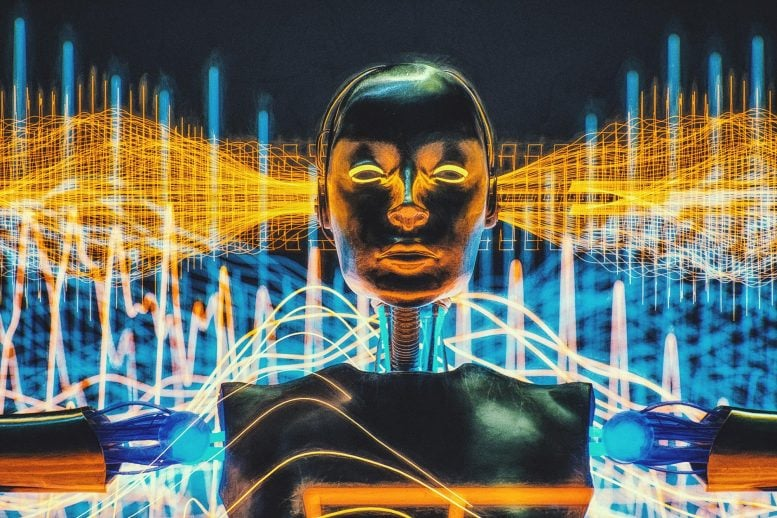


"New research addresses the risks and liabilities associated with implementing AI in the food industry, proposing a temporary adoption phase to assess AI’s benefits and challenges, and emphasizes the need for more research on legal and economic structures." (ScitechDaily, The Paradox of Perfection: Can AI Be Too Good To Use?)


But does AI think?


The fact is that the AI is not yet thinking. And if we want to make the AI, that thinks like humans, we have two choices.

1) We can make database solutions where there are billions of databases. The human brain involves about 100 billion neurons. The synapse connections increase the number of those neurons.

Interconnecting neurons that system can create virtual neurons and make database combinations. That ability makes it possible. That there could be more than 250 billion combinations of the databases.

So AI that thinks like humans requires 100 billion microchips with at least 100 billion databases, that this system can connect.

2) We can make a computer that uses living neurons. That kind of hybrid computer is more effective than before.


Image: Deep Blue versus Garry Kasparov - Wikipedia

In normal cases, the AI is a language application that turns human commands into models. That computer understands. Researchers can put this kind of language model into the microchip kernel. And that thing makes it possible for the next-generation computers can follow spoken commands.

As I wrote many times before in those applications, the language model plays a key role. It is at the center of all applications. That language model is used to command the computer in the center of other applications.

The language model can use a speech-to-text application to drive spoken commands to the application. That kind of AI has a model where it can search for safe and confirmed information. There is a list of the file descriptions that deliver trusted and confirmed data. Those things are governmental and university homepages.

After that, the AI collects homepages and connects them to texts and data in a certain order. There is also a model of how the AI can make correct text that has a good vocabulary. So the system knows predicates, subjects, and other things. That is required to make fluent text.

But some other types of AI react to situations. That kind of AI tool sees that something happens it comples that thing with things. That is stored in its memory. If there is a match the AI makes the act. That connected to that action. These kinds of AIs are things that used to take thieves. Or the AI, that controls drones can make escape and evasion movements when it sees incoming missiles or AA-flak.

The AI seems like thinking. But it just collects information from the Internet. And then it connects that information. The AI can make the answer with very high accuracy. And how good-looking answers the AI can give depends on the data mass that it can use. Also, things like polite answers are making AI seem human.

If we think that the AI-controlled robot is programmed to answer to puch with puch, that thing makes it human. The robot can also say that it hurts when its sensors detect a punch. That is hard enough. The robot can also call the police if some vehicle hits it. But those robots don't think.

Thinking AI requires the living neurons. Neuro-computers that use living neurons can think. The biocomputer always thinks. But those neurons require information that they connect. Thinking is simple connecting databases and making the new networked entireties about them.

When we think that some AI turns against humans, we might use things like EMP weapons against it. The EMP weapons are usually quite harmless to people, but they destroy the electric components. AI is a tool that will make many things different than before. But it can serve humans.

The thing with AI is that we must not let AI think for us. When we talk about military applications. We must realize that modern warfare is more complicated and changing than ever before.

Things like GPS-guided bombs are predicted, to be easy to jam. But reality is another, and at least Russians have not successfully cut the GPS signals. In the Western world, we think, that the military should protect the land and its people. We must realize that the military is a brutal world. Its purpose is afraid of enemies. And then we must realize, that what we define is the solution that we make good or bad.


https://scitechdaily.com/can-artificial-intelligence-think-like-a-human/


https://scitechdaily.com/the-paradox-of-perfection-can-ai-be-too-good-to-use/


https://learningmachines9.wordpress.com/2024/01/23/can-ai-think-like-humans/

The pocket-sized AI and humanoid robots are the ultimate compilation.

  The pocket-sized AI and humanoid robots are the ultimate compilation.


The human-looking robots are the next-generation GP (General Purpose) tools.


The pocket-sized AI and humanoid robots are the ultimate compilation.


AI means a language model that can translate spoken commands to computer programs. And it's possible. That the AI can create morphing program entirety for robots. That kind of morphing program module environment means that the robot can make its missions in multiple conditions and turn the robots more flexible. Than ever before.

In AI-based systems, the center of the system is the language model. The language model is the tool, that turns spoken words into commands. That computers understand. The language model simply transforms spoken words into algorithms that computers use to control robots and other systems. The language model makes it possible.

The system can make customized computer programs in real-time. The AI follows orders that the user gives, and then it creates new programs or modules for computers or robots, this ability means that the AI can also delete those programs when it doesn't need them anymore.


The user can connect this kind of AI device to the computer using the USB. Or wirelessly, using a BlueTooth connection.

The BMW starts to test human-looking robots in their assembly lines. Those human-looking robots can use the same tools as humans. And they can make morphing networks. Those systems can use central computers or the robots can make morphing networks with each other. In that network, robots can share their data and computer capacity over the network. And that allows the robots can operate as a unit. That means large groups of robots can operate in their entirety.

Portable AI or systems that involve language models that can connect with those systems allow to make fast changes in those robots' programming. AI- or language models that can control robots and use spoken speech could be game-changers in that kind of technology. Robots can do many things that are not possible for humans. The human-looking robots are also tools. That is interesting about researchers, space, and deep-sea explorers, and military personnel.

The human-looking robots can perform surgical operations. In those cases, human operators oversee those operations. Those remotely controlled robots can bring doctors to very remote places. The robot is only a body, and its programs determine its use of the same robot.

That operates as a gardener can operate as a surgeon if its control programs are changed. Same way robots that clean floors can be reprogrammed to combat robots. And by using man-shaped robots every single aircraft in the world can turn into a robot plane. This means also large-size old aircraft can used for kamikaze missions.


https://www.freethink.com/robots-ai/general-purpose-robots


https://www.indiatoday.in/technology/news/story/rabbit-r1-the-cute-little-pocket-size-viral-ai-device-that-can-do-everything-for-you-2487278-2024-01-11


https://learningmachines9.wordpress.com/2024/01/23/the-pocket-sized-ai-and-humanoid-robots-are-the-ultimate-compilation/

A pulsar that orbits a black hole makes it possible to test relativity. And uncover Einstein's enigma.

A pulsar that orbits a black hole makes it possible to test relativity. And uncover Einstein's enigma. 


"An artist’s impression of the system assuming that the massive companion star is a black hole. The brightest background star is its orbital companion, the radio pulsar PSR J0514-4002E. The two stars are separated by 8 million km and circle each other every 7 days. Credit: Daniëlle Futselaar (artsource.nl) (ScitechDaily, Einstein’s Enigma: How a Mysterious Cosmic Object in Milky Way Could Test Relativity Like Never Before)

All objects in the universe are gravitational centers. But gravitation is not the only force in the universe. It's dominating and interacts over long distances. The size of the gravitational center determines how far gravitation can interact. Things like planets are gravity centers, or actually, they are groups or entireties of gravitational waves. 

Objects or atoms and subatomic particles that form planets and other entireties receive electromagnetic or quantum radiation. Those objects take that radiation into their quantum fields, and sooner or later those particle's energy level turns higher than the environment. Then they send radiation that pushes them away from each other. Quantum gravitation means that the gravity field around single atoms and subatomic particles is very weak. The electromagnetic reflection from those atoms and particles destroys material and entireties sooner or later. 

Expansion of the universe decreases the universe's energy level all the time. And that thing makes sure that energy travels out from particles. Energy travel or material vaporization happens also inside the objects. And that thing causes a situation where radiation that comes in the entirety pushes the outer level outside. The universe's expansion guarantees that energy flows out from material and continues all the time. And that energy rips material into pieces and turns it into wave movement. 


PSR J0514-4002E: pulsar that orbits the black hole. 


A new object allows researchers to test relativity better than any time before. That new and interesting object is a radio pulsar PSR J0514-4002E. And the thing that makes this pulsar interesting is that it orbits a black hole. The black hole pulls radiation from the pulsar. And allows researchers to measure the curvature of spacetime. That thing can open roads to measure the mysterious effects like gravity and dark matter. That strange binary star also gives information about the time dilation. 

That object also makes it possible to research how gravitational waves act in its environment and other particles that orbit black holes. The thing is that the gravitational waves can reflect and they can push each other from their track like electromagnetic wave movement makes. So gravity is like light or radio waves. 

The curvature of spacetime means that there is a "gravitational pothole" in space. The thing that makes the time dilation is the denser quantum fields, and when some object falls into a black hole, that gravitational pothole makes quantum fields pump more energy into the object. And that energy transfer is the thing, called time dilation. When the object travels in the gravitational pothole, gravity causes effect, where those quantum fields touch it longer, and transport energy into it. 


"Potential formation history of the radio pulsar NGC 1851E and its exotic companion star. Credit: Thomas Tauris (Aalborg University / MPIfR)" (ScitechDaily, Einstein’s Enigma: How a Mysterious Cosmic Object in Milky Way Could Test Relativity Like Never Before)


A black hole is a gravitational center just like planets and stars. But it's more massive. 


The black hole is the gravitational center. Just like all other gravitational centers like Earth, Jupiter, and the Sun. But in black holes, those quantum fields are denser than in regular gravitational objects. We can say that black holes and other gravity centers are like onions. How tightly packed those quantum fields are determines the strength of gravity. 

In black holes that onion is extremely tightly packed quantum fields around the nucleus of that object. When those quantum fields oscillate they form an electromagnetic vacuum between them. And that vacuum pulls electromagnetic fields to the black hole. So we can say that gravity is an effect that affects the environment. The environment called spacetime is an electromagnetic quantum field that pulls particles into the gravitational center like a river takes garbage with it. 


The gravity field is one of the quantum fields, just like electromagnetic fields are. 


When a supernova explodes there forms an electromagnetic vacuum around that object. Then other electromagnetic (or quantum) fields from outside that explosion press that bubble black in the place, where an explosive star has been before. Then those quantum fields form a structure that looks like an onion. 

Also, that crush turns the size of those particles. It pushes electrons and all quarks into one entirety. The wave movement or quantum fields that come from outside causes oscillation in that "gravity onion". And that oscillation sends gravity waves. When a black hole sends gravity waves it loses part of its mass. 

The outcoming quantum fields keep the black hole in its form. There could be a gravitational or electromagnetic tornado in the black hole, that transports energy out from it. Because that quantum tornado pulls quantum fields out from the black hole's rotation axle. That means that the structure acts like a thermal pump. The reason why that material can escape from the black hole is that. The gravity field at the event horizon is stronger than inside the black hole. 

The effect is similar to the case, where we would fall into gas planets like Uranus. The massive gravity around that planet forms when the planet, and its atmosphere pull objects as an entirety. But when we are on the solid core of that planet, gravity would be lower than on Earth. 

When an object travels in a gravitational tornado the internal quantum fields of the black hole pump energy in it, and because gravity is force. That affects to environment. The object can escape from a black hole because the speed of light is relative. That means the speed of light is always relative to the speed of the environment. An object's speed about the speed of quantum fields determines the speed of particles that travel in them. 


"A zoom into the globular cluster NGC 1851 followed by an orbital simulation showing the original pulsar – white dwarf binary being disrupted by the arrival of a massive third body of unknown nature. The new arrival kicks the white dwarf out of orbit and captures the pulsar for itself, forming a new binary system with a pulsar in orbit around, most likely, either a light black hole or a supermassive neutron star. Credit: OzGrav, Swinburne University of Technology" (ScitechDaily, Einstein’s Enigma: How a Mysterious Cosmic Object in Milky Way Could Test Relativity Like Never Before)


Every single particle or object in the universe, from gluon to planets, is the gravitational center. Things like planets are entireties of the gravitational sub-centers. 


The reason why gravity is stronger at the edge of a black hole is that a black hole pulls objects as an entirety. When objects fall in the black hole they form independent gravity centers inside the event horizon. That means black holes are not as solid and homogenous as people think. 

Just like all particles form independent gravity centers in the gravity center called Earth, similar particles form gravitational centers around and in the event horizon. Those gravitational centers form internal gravitational waves inside objects. 

Gravitational waves also can reflect from each other like all other wave movements. And there is a possibility that gravitational waves that reflect from those particles and objects suppress each other. 

When an object travels behind the event horizon to the middle of the black hole, there are fewer objects in front of it when it closes the black hole's core. 

In black holes, the event horizon sends gravity waves also in the black hole. Those gravity waves impact in the middle of it, then they reflect to the event horizon. 

When radiation travels through that gravity onion it reaches its nucleus. In the middle of the black hole. That radiation will pack until it reaches a higher energy level than its environment. The thing is that when the object closes the heart of a black hole it faces a situation, where there is less black hole or material ahead of it. That means the gravity level in the middle of a black hole is lower than at the edge of the event horizon. 


The gravitational effect is always the same. But the strength of that effect changes. And that's why researchers can use gas planets like Uranus to make a model of how gravity interacts in the black hole. 


To prove that thing. We must think about an object or planet where we can dive. What kinds of objects are gas planets? Gas planets are planets with massive atmospheres that are around solid core. So when we dive into the gas giant. We would dive into the planet. And we can use that model, to make models of how gravity works in massive objects. 

The idea is that gravity always has the same form. And it affects objects in the same way. But the strength of that field is different. But without depending on the strength, gravity fields always act the same way. 

The thing that drives particles forward is the quantum field or wave movement that comes from backward. The effect where gravity fields weaker when we fall into an object is known from the gas giants like Uranus. Uranus has a massive gravity field when we look it out from its atmosphere. Outside the Uranus gas and solid material pull objects as an entirety. 

But if we dive into that massive gas giant's atmosphere, and fall to its solid shell, their gravity would be lower than on Earth. The reason for that is outside the planet's atmosphere planet and its giant atmosphere pull objects as an entirety. But if we fall into that planet, or its massive atmosphere there is less gravitational mass ahead of the object. But the pressure of the atmosphere is massive. 


https://scitechdaily.com/einsteins-enigma-how-a-mysterious-cosmic-object-in-milky-way-could-test-relativity-like-never-before/


Monday, January 22, 2024

Quantum computers can be smaller than atoms. And a new way to control biorobots.

 Quantum computers can be smaller than atoms. And a new way to control biorobots. 


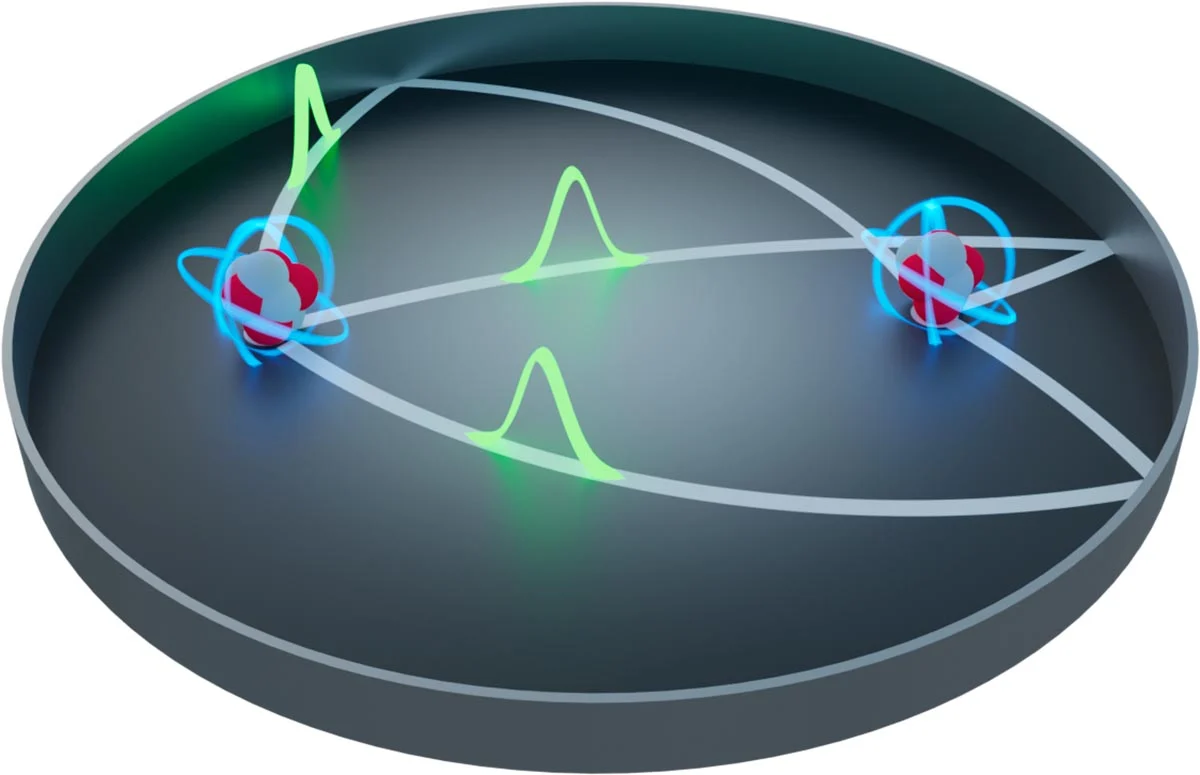
"Emission of a single photon in the Maxwell fish-eye lens. Credit: Oliver Diekmann (TU Wien)" (ScitechDaily.com/Quantum Ping-Pong: The New Era of Atomic Photon Control)

Nanotechnology requires new types of computers. The nanomachines can control genetically engineered bacteria by turning DNA plasmid like a rudder. 

But let's begin with quantum ping-pong. The DNA plasmids also can act as chemical qubits. 


"Maxwell fish-eye lens with two atoms. A photon (green) is traveling between the two atoms along the curved light rays (white). Credit: Oliver Diekmann (TU Wien)" (ScitechDaily.com/Quantum Ping-Pong: The New Era of Atomic Photon Control)


Quantum ping-pong is the new atomic way to control light. 


The ability to control light or photon flow at the single-atom- or subatomic level brings new ways to make quantum computers. Theoretically, quantum computers can be proton- or neutron-sized. The system transports information through the electron shells to quarks. And then the quantum system puts quarks into the superposition and makes quantum entanglement between them. There is also the possibility of making quantum computers using superpositioned and entangled electrons on the orbitals around the atom's core. 

That thing allows us to make a new type of effective, atom-size quantum computer with two or three parts. And that thing turns those atom-size quantum computers into the "iron-based AI". The electrons and quarks inside protons and neutrons form three different entirety. If the system does not use quarks as the superposition, it can create superposition and entanglement between protons and neutrons as entireties. 

That kind of atom-size quantum computers can revolutionize nanotechnology. If those miniature quantum computers are connected with nano-size microchips that thing allows us to make independently operating nanomachines. The atomic-size components allow the system to drive complicated code. And then there could be miniature thermos bottles, where those qubits exist. 


The chemical qubits and biorobots. 


It's possible to create a ring-shaped protein. And then on that protein is the small magnesite bites. Then the system drives data to those magnesite bites. And after that, the computer transports this enzyme to the gate. And if there are eight magnesite contact layers the system can drive data that is cut in eight pieces into the eight wires. And each of those wires is one state of qubit. 


Plasmid wheel as a qubit. 


This kind of thing can act as a chemical qubit. If there are bacteria that can create electric impulses the synthetic DNA or RNA can make these bacteria make the electric impulses, which allows them to send data to the non-organic binary computer. There is the possibility that the nano-size computer and DNA factory make the DNA encoded the data, and then the system turns that DNA into a plasmid wheel. 

Then it cuts that plasmid into four (or more bites) and transports them into the four bacteria. Then those bacteria send information into the lines, and each of those (in this case) four lines is one state of the qubit. These kinds of systems can used to control biorobots. 


There could be a series of DNA plasmids in genetically engineered bacteria. In that case in electric bacteria, individual DNA can operate each of those strings and electric impulses that those bacteria send. Those artificial organisms can be the gate between biocomputers and regular binary computers. The DNA factory can encode data into the DNA form. And then the artificial electric bacteria can encode that data for the computer systems. 

Biorobots and nanotechnology. Nanomachine can turn DNA plasmid like a small rudder. 


Biorobots are genetically manipulated bacteria. The DNA plasmid controls the bacteria's operations. The nanomachine that turns the DNA plasmid into the right position can drive bacteria in the direction, where controllers want. The DNA plasmid is like a rudder that the nanomachine turns. 

Programming the bacteria can be based on the synthetic DNA or RNA bites. Those bites can connected to the protein or enzyme. The enzyme is like a long tape that normally catalyzes acid reactions. The reason why some enzymes make that thing is simple. There are acid molecules on the enzyme, and when it moves above the layer, that tape-looking molecule brings fresh acid molecules to the point. 

There are other ways how enzymes can catalyze the acid reactions. But this kind of enzyme tape can also carry DNA bites to the right point of the bacteria. If those wheel-looking DNA molecules are transported near the nanomachine. That turns the DNA plasmid, the nanomachine can destroy the plasmid and then take the new one from the enzyme tape. 


https://scitechdaily.com/quantum-ping-pong-the-new-era-of-atomic-photon-control/


https://learningmachines9.wordpress.com/2024/01/22/quantum-computers-can-be-smaller-than-atoms-and-a-new-way-to-control-biorobots/


Sunday, January 21, 2024

The new technology allows researchers to see how memory and cognition happen in real-time.

 The new technology allows researchers to see how memory and cognition happen in real-time.


"A research team developed SynapShot, a novel technique for real-time observation of synapse formation and alterations. This breakthrough, allowing live monitoring of synaptic changes in neurons, is expected to transform neurological research and enhance understanding of brain functions. Credit: SciTechDaily.com"(ScitechDaily.com, SynapShot Unveiled: Observing the Processes of Memory and Cognition in Real Time)


Figure 1. To observe dynamically changing synapses, dimerization-dependent fluorescent protein (ddFP) was expressed to observe flourescent signals upon synapse formation as ddFP enables fluorescence detection through reversible binding to pre- and postsynaptic terminals. Credit: KAIST Optogenetics & RNA therapeutics Lab (ScitechDaily.com, SynapShot Unveiled: Observing the Processes of Memory and Cognition in Real Time)


"Figure 2. Microscopic photos observed through changes of the flourescence of the synapse sensor (SynapShot) by cultivating the neurons of an experimental rat and expressing the SynapShot. The changes in the synapse that is created when the pre- and post-synaptic terminals come into contact and the synapse that disappears after a certain period of time are measured by the fluorescence of the SynapShot. Credit: KAIST Optogenetics & RNA therapeutics Lab"

The text and images above are from: SynapShot Unveiled: Observing the Processes of Memory and Cognition in Real Time (scitechdaily.com)


XXXXXXXXXXXXXXXXXXXXXXXXXXXXXXXXXXXXXXXXXXXX


Dimerization-dependent fluorescent proteins (ddFP) protein make the real-life brain hack possible.


The protein called dimerization-dependent fluorescent proteins or ddFP are things that can unveil the synapse actions in real-time. That protein tells how the brain, memory, and cognition act in real time. This kind of thing can connect with AI-controlled systems, and the next-generation mind-reading instrument is ready. The system can cooperate with generative AI.

And that thing makes the system see how cognition and memory work. This kind of information is important when we think about the possibility of creating BCI-controlled applications. Those applications can make it possible to transfer memories between people. In some visions, those systems can also transfer people's memories on the computer screens. But this kind of brain-reading tool can also bring animals' memories to the laptop screen.

The ability to see how memory and cognition work in brains helps the researchers to create cloned neurons, that can have their memories. The memories contain the skills that humans have. Researchers can make the cloned neurons that they can use to fix neural damage. But the problem is this. When a neuron is destroyed all skills and other memories. Stored in it are gone. This means something must put memories into the neuron transplant.

The ability to transfer cloned neurons to fix damaged neural structures is a good idea. However, the neural transplant must involve the same skills and memories stored in destroyed neurons. The ddFP protein is too good candidate for things that the system uses to control that process.

The real fundamental thing is that those sensors can see what animals think. That thing can open new ways to communicate between species.

The new brain scanners open the gate to see, what kinds of dreams animals see, while they dream. The information about the animal's dreams helps us to understand why we sleep lots of time while we are alive. But the knowledge about the animal's thoughts helps us create better conditions for animals, and protect wildlife.


https://scitechdaily.com/synapshot-unveiled-observing-the-processes-of-memory-and-cognition-in-real-time/ 


https://learningmachines9.wordpress.com/2024/01/21/the-new-technology-allows-researchers-to-see-how-memory-and-cognition-happen-in-real-time/

Researchers can use information about the "diamond rain" on icy planets to form industrial diamonds,

 Researchers can use information about the "diamond rain" on icy planets to form industrial diamonds,


"The graphic shows the diamond rain inside the planet, which consists of diamonds sinking through the surrounding ice. Pressure and temperature continuously increase on the way deeper inside the planet. Even in extremely hot regions, the ice remains due to the extremely high pressure. Credit: European XFEL / Tobias Wüstefeld" (ScitechDaily.com, “Diamond Rain” on Icy Planets: Unlocking Magnetic Field Mysteries)


"A new study reveals that “diamond rain” on icy planets like Neptune and Uranus forms under less extreme conditions than previously believed. This phenomenon influences the planets’ internal dynamics and magnetic fields and could also occur on smaller exoplanets." (ScitechDaily.com/“Diamond Rain” on Icy Planets: Unlocking Magnetic Field Mysteries)

The diamond rain on icy planets can tell about the magnetic field. The researchers can use that information about the formation of diamond rain on Uranus and Neptune about the production of small-size diamonds, that are useful as antennas in nanotechnology and new types of optical microchips.  

The new information tells us that diamonds form because of the combination of pressure, gravity, and magnetic field. And that thing means it's possible. That researchers can form those conditions in the laboratory. The key element of diamond rain is that it forms in lower pressure or upper atmosphere than previously thought. 

"A new experiment suggests that this exotic precipitation forms at even lower pressures and temperatures than previously thought and could influence the unusual magnetic fields of Neptune and Uranus."  (ScitechDaily.com/“Diamond Rain” on Icy Planets: Unlocking Magnetic Field Mysteries)

It's possible. That researchers can copy conditions. That is on the layer where diamonds form in the laboratory chamber. If that thing is possible, the researchers can create a new way to make artificial diamonds. Previously that technology required high pressure and temperature. And that thing meant that the diamond production required high-pressure chambers.

But if "cold" technology is possible, that thing can make a new way to create industrial diamonds. Maybe the next-generation chamber for the artificial diamond is the "X-shape" wind tunnels where methane or ammonia gases flow crossing and then those molecule impacts will reduce carbon. And maybe those carbon atoms can start to collect carbon atoms from the gas flow. That involves hydrocarbon. 

It's also possible that the magnetic or laser systems can press methane or some other hydrocarbon atoms together. And then that thing removes hydrogen. Then the gas flow with those proto-diamonds starts to reduce carbon from other hydrocarbon molecules. That thing starts the growth of the carbon crystals. 

The nanocrystals can used as a stylus for scanning tunneling microscopes. The atom can hover between the layer and stylus, whose tip is the size of one carbon atom. That system can scan layers with extremely high accuracy. 

The form of those raining diamonds is interesting because they are suitable for nanotechnology. In nanotechnical antennas diamonds conduct electromagnetic radiation or pressure waves in photoacoustic systems. In photoacoustic systems, the laser rays make oscillations in the carbon atoms. And that oscillation is visible as the sound waves. That system can transmit data to the system, or it can move small particles on the layer. 


https://scitechdaily.com/diamond-rain-on-icy-planets-unlocking-magnetic-field-mysteries/


https://en.wikipedia.org/wiki/Scanning_tunneling_microscope


https://learningmachines9.wordpress.com/researchers-can-use-information-about-the-diamond-rain-on-icy-planets-to-form-industrial-diamonds/


The next generation of killer drones is coming.


The success of the Bayraktar TB-2 drones in Ukraine was impressive. But the trend goes to smaller, AI-controlled fire-and-forget systems. Those systems recognize their targets autonomously. And then they can make kamikaze attacks against those targets. 

The AI is cheap. The system requires that the control software is loaded into that system. Then the operator can launch it, and escape from the launching point. The kamikaze drone can patrol over the battlefield. And when it runs out of fuel, it can attack against targets. 

The drone operator can launch the drone near its target. The image-recognition system allows the drone to operate independently. And then that drone can patrol over the target, and leave the operator time to flee. The system requires only an image of the target. When the image, stored in the drone's memory matches with camera image, the drone can dive against its targets. 

Bigger drones like Predators and Bayraktars can also transport those drones to operational areas. They can also equipped with warheads and used against large-size targets. Or they can used as decoys to uncover the enemy AA system's positions. 

The next trend in killer robots is loitering ammunition. Those systems are so-called kamikaze drones that are cruise missiles. 


Boeing Dominator is typical kamikaze-drone. The military can deliver that ammunition from manned or unmanned ground vehicles, boats,  helicopters, aircraft, another drone, or even from ballistic missiles. The size of the kamikaze drone is not limited. 


The nuclear kamikaze. 


The unmanned  F-35 Lightning II can also carry nuclear weapons and detonate them inside those aircraft. That makes them the kamikaze nukes that are deadlier than ever before. Those drones can patrol like all other aircraft, and when the orders come, that kamikaze drone attacks its target. The thing is that those nuke drones can return to base if there is no use for their weapon. 

In some visions, the unmanned F-35 Lightning II  can carry the internal nuclear bomb to target and detonate it in the aircraft. That kind of large kamikaze drone can have sub-missiles. That allows it to attack interceptors that try to defend it. 


Aquila-type drones can equipped with warheads. And the AI can find targets from the battlefield. 


Those missile's mission is to operate over the battlefield. The loitering ammunition or kamikaze drone is more effective than traditional drones like Bayraktars and Predators. 

The thing is that the large-size kamikaze drone can also carry sub-munitions like Hellfire missiles. It can use those missiles for air-defense suppression or destroy secondary targets while it travels to its main target. The bigger size drones like the retired X-47B can transport smaller kamikaze drones like the Boeing Dominator into the operational area. Or the big-size kamikaze drones can also used against large-size targets. The fact is that ballistic missiles can also shoot kamikaze drones into operation areas. 

The kamikaze drone can operate over the battlefield and send information to the drone controller. And when its fuel is empty, that system can select a target, and make a kamikaze-strike against it. The difference between this kind of kamikaze system, and traditional drones is that loitering ammunition can send data to headquarters using one-way data transportation. 

Kamikaze-drone can use selective AI to choose targets. That means the kamikaze drone uses similar AI-based target recognition systems as the Javelin missile. The drone has images in its computer's memories. Then it can select targets from its camera images. Those targets might have classification. The targets that the system can attack immediately. And targets that the system can destroy later. If there are no higher-value targets. When the kamikaze drone sees a target it marks its position for the GPS and then returns later to make the attack. Or it can attack immediately. 

That means the headquarters must not send data. And that thing makes it harder to detect the command unit, which can be a laptop and backpack-size communication unit. Or the system can communicate through modified GPS. And that means the command system can fit in the user's pocket.  The user can point to the targets by using the GPS data that the loitering ammunition sends. And follow the advance of the system using a mobile telephone. 


https://en.wikipedia.org/wiki/Bayraktar_TB2


https://en.wikipedia.org/wiki/Northrop_Grumman_X-47B


https://en.wikipedia.org/wiki/Lockheed_MQM-105_Aquila


https://learningmachines9.wordpress.com/the-next-generation-of-killer-drones-is-coming-ext-generation-of-killer-drones-is-coming/


Time travel and its connection with philosophy.

“The 2022 physics Nobel Prize was awarded for experimental work demonstrating fundamental breaks in our understanding of the quantum world, ...